
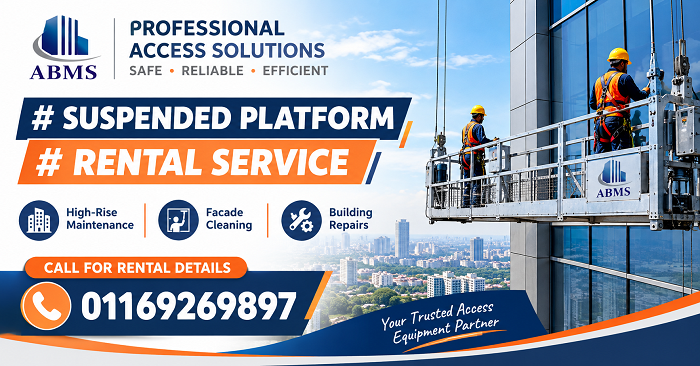
Suspended Platform Rental Service | Abms Services
High-rise buildings require specialized equipment to carry out external maintenance, glass cleaning, facade inspection, painting, repair and renovation work. Accessing elevated areas safely and efficiently can be challenging, especially when buildings feature large glass facades, multiple floors and complex architectural designs. A suspended platform provides a practical access solution for working at height, allowing trained workers to reach designated areas of a building exterior.
Abms Services offers suspended platform rental services for building maintenance, construction, commercial properties, residential towers and industrial projects. Our rental solutions are intended for contractors, facility managers, construction companies, building owners and maintenance professionals who need suitable access equipment for specific project durations.
Renting a suspended platform can be a practical alternative to purchasing equipment for short-term or occasional projects. Instead of making a significant initial investment, businesses can explore rental options based on their project requirements, working height, duration and equipment specifications.
Whether the requirement involves glass cleaning, exterior painting, facade maintenance or building repair, selecting the appropriate suspended platform is an important part of project planning. Abms Services focuses on understanding the requirements of each project so that customers can identify a suitable platform rental solution.
What Is a Suspended Platform?
A suspended platform is a work platform supported by suspension equipment and designed to provide access to elevated working areas. It is commonly used for external building maintenance, construction finishing, glass cleaning, facade inspection and repair activities.
Depending on the design, a suspended platform may use electric hoists, suspension ropes, wire ropes, roof-level suspension arrangements and other supporting components. The platform can be raised or lowered to reach different working positions along a building facade.
Motorized suspended platforms are commonly used where workers need to move vertically along high-rise structures. The specific platform design, rated capacity, suspension arrangement and safety equipment must be suitable for the intended application.
A suspended platform rental service allows customers to obtain access equipment for a defined project period instead of purchasing a complete system. The rental arrangement should clearly establish equipment specifications, availability, delivery, installation responsibilities, inspection requirements and operating conditions.
Suspended Platform Rental Service by Abms Services
Abms Services provides suspended platform rental solutions for customers who require access equipment for elevated building work. Our services are intended to support different maintenance and construction requirements, including facade cleaning, glass maintenance, exterior painting, inspection and renovation.
Every project has different requirements. A residential building may need a platform for periodic exterior cleaning, while a commercial tower may require access equipment for extensive glass facade maintenance. A construction contractor may need a suspended platform for finishing work during a specific stage of a project.
For this reason, selecting rental equipment should begin with an assessment of the project. Important considerations include building height, facade shape, work area, platform dimensions, required load capacity, duration of use and suitable suspension arrangements.
Abms Services aims to help customers identify appropriate suspended platform rental options according to their project requirements. Equipment selection, installation and operation should always follow the manufacturer's instructions and applicable safety requirements.
Why Choose a Suspended Platform on Rent?
Purchasing specialized access equipment may not be practical for every business. Some contractors need a platform only for a short-term construction project, while building owners may require equipment for periodic maintenance.
Renting can provide flexibility by allowing customers to obtain equipment for a specific period. It may also help businesses avoid some of the responsibilities associated with owning equipment, depending on the agreed rental terms.
Lower Initial Investment
Rental arrangements can reduce the need for a large upfront equipment purchase. This can be useful for contractors and businesses managing multiple projects with different access requirements.
Flexible Rental Duration
Depending on availability and the rental agreement, customers may be able to arrange equipment for short-term projects or longer maintenance schedules. The rental period should be planned around the project timeline to avoid unnecessary delays or additional charges.
Suitable for Temporary Projects
Suspended platforms are useful when elevated access is required for a limited period. Examples include facade painting, glass replacement, waterproofing, renovation and construction finishing.
Support for Specialized Work
Different projects require different types of access equipment. Rental services allow businesses to explore suitable equipment options according to the work being performed rather than relying on a single platform for every application.
Project-Based Planning
Renting equipment for a specific project can help contractors plan access requirements, work schedules and equipment costs together. A clear rental agreement helps define the responsibilities of the supplier and customer.
Applications of Suspended Platform Rental Services
Suspended platforms are used across a variety of industries and building maintenance activities. The equipment must be suitable for the particular task, working environment and required operating conditions.
High-Rise Building Maintenance
High-rise buildings require regular inspection and maintenance of their external surfaces. Suspended platforms can provide access to selected areas of the facade for cleaning, painting, repairs and other maintenance tasks.
Glass Cleaning
Large glass facades require periodic cleaning to remove dust, water marks and environmental deposits. A suitable suspended platform allows trained cleaning personnel to reach external glass surfaces at different heights.
Facade Inspection
Building facades may require inspection to identify damaged panels, deteriorated sealants, loose components and other visible defects. A suspended platform can provide access to specific facade sections for inspection by trained personnel.
Exterior Painting
Painting the exterior of a building often requires access to elevated surfaces. A suitable suspended platform can support painting and coating work when the equipment is configured for the intended task.
Waterproofing Work
Waterproofing and sealant maintenance may require access to exterior joints, facade interfaces and selected wall areas. Suspended access equipment can help workers reach these locations when the system is appropriate for the work.
Facade Repair and Renovation
Building renovation may involve replacing damaged facade components, repairing exterior finishes, inspecting joints or performing other maintenance tasks. Renting a suitable suspended platform can provide temporary access for the duration of the project.
Window and Exterior Glass Maintenance
Commercial buildings, hotels, offices and residential towers may have extensive external glazing. Suspended platforms can support maintenance activities where a properly designed and installed access system is available.
Types of Suspended Platforms Available for Rental
The most appropriate platform depends on the building design, working height, required load capacity, suspension arrangement and nature of the work. Customers should confirm equipment specifications and availability before finalizing a rental arrangement.
Electric Suspended Platform
An electric suspended platform uses powered hoists to raise and lower the work platform. It is commonly considered for building maintenance and construction applications that require repeated vertical movement.
Before rental, the customer should confirm the electrical requirements, rated capacity, operating controls, safety devices and compatibility of the platform with the intended installation.
Motorized Suspended Platform
A motorized suspended platform is designed to move vertically using powered lifting equipment. It can be useful for projects involving extensive facade areas where workers need to access different working heights.
The equipment must be installed and operated according to the manufacturer's instructions. Its working capacity should never be exceeded.
Rope Suspended Platform
A rope suspended platform is supported by a suitable suspension arrangement and lifting system. It can be considered for selected external maintenance applications where the equipment is appropriate for the building and working conditions.
The suspension arrangement, ropes, anchors, hoists and associated safety equipment must be compatible and suitable for the intended use.
Building Cleaning Cradle
A building cleaning cradle is a suspended work platform commonly used for cleaning windows and maintaining external building surfaces. Depending on its configuration, it can provide access to different sections of a building facade.
Rental customers should confirm the platform dimensions, capacity, lifting system and installation requirements before choosing a cleaning cradle.
Suspended Gondola
A suspended gondola is another term commonly used for certain types of suspended work platforms. These systems are used in applications such as exterior cleaning, painting and maintenance of high-rise structures.
The specific equipment should be selected according to the required working area, load capacity and building access conditions.
Suspended Platform Rental for Commercial Buildings
Commercial buildings often feature large exterior glass surfaces, architectural cladding and multiple floors that require periodic maintenance. Keeping these surfaces clean and well maintained can contribute to the property's appearance and help identify maintenance issues.
Suspended platform rental can support commercial property managers and maintenance contractors who need temporary access equipment for cleaning, inspection, painting and repair work.
Before starting the project, the building management team should assess roof access, suspension points, ground-level exclusion zones and any nearby obstacles. The selected system must be compatible with the building structure and intended work.
Suspended Platform Rental for Residential Buildings
Residential towers and apartment complexes may require external glass cleaning, facade repairs, painting and periodic inspection. These activities can be difficult to perform using conventional access methods, particularly on tall buildings.
Renting a suspended platform can provide a temporary access solution for a planned maintenance activity. Housing societies, facility managers and maintenance contractors can evaluate rental options according to building height, facade layout and the expected duration of the work.
All work should be scheduled with appropriate precautions for residents, visitors and vehicles. The work area below the platform should be controlled to reduce the risk of injury from falling objects.
Suspended Platform Rental for Hotels and Hospitals
Hotels and hospitals require regular maintenance of their external surfaces. Glass cleaning, facade inspection and exterior repair may be necessary to maintain the building and address visible deterioration.
A suitable suspended platform rental arrangement can help maintenance teams access designated exterior areas during planned work. The work schedule should take account of building operations, pedestrian movement and any site-specific restrictions.
Equipment selection and installation should be handled by appropriately qualified personnel, with safety controls established before work begins.
Suspended Platform Rental for Construction Projects
Construction projects often require temporary access equipment for exterior finishing, painting, cladding work, inspection and other elevated tasks. Renting a suspended platform can help contractors obtain suitable equipment for the relevant construction phase.
Before choosing a platform, the contractor should establish the required working height, expected loads, work duration, site conditions and compatibility with the building structure. The platform should be suitable for the task and used only within its approved operating limits.
Suspended Platform Rental for Industrial Facilities
Industrial buildings may require maintenance of exterior walls, high-level windows, cladding, structures and selected elevated surfaces. In suitable situations, suspended access equipment can help workers reach these areas.
Industrial environments may introduce additional considerations, including machinery, electrical hazards, dust, chemicals and vehicle movement. A site-specific risk assessment should be completed before equipment is installed or operated.
Factors to Consider Before Renting a Suspended Platform
Selecting the right suspended platform is essential for project efficiency and safe working conditions. Customers should review the following factors before confirming a rental service.
- Building height: Confirm the required working height and vertical travel distance.
- Platform dimensions: Choose dimensions suitable for the working area and building geometry.
- Rated capacity: Confirm the permitted combined load of workers, tools and materials.
- Suspension arrangement: Ensure the roof-level equipment and suspension points are suitable for the system.
- Facade configuration: Consider projections, balconies, setbacks and other architectural features.
- Project duration: Estimate the rental period and expected working schedule.
- Power requirements: Confirm the electrical supply and other operating requirements where applicable.
- Safety equipment: Verify the required protective devices and personal fall protection arrangements.
- Installation requirements: Establish who is responsible for installation, inspection and commissioning.
- Site conditions: Consider roof access, ground-level activities, weather exposure and nearby hazards.
- Maintenance support: Clarify inspection, breakdown reporting and service responsibilities.
Suspended Platform Rental Price
The rental cost of a suspended platform depends on several project-specific factors. There is no single price that applies to every building or every type of equipment.
Factors that can affect the rental price include platform type, platform length, rated capacity, working height, rental duration, transportation, installation requirements and site accessibility.
Additional services, such as installation, dismantling, inspection and technical support, may be included or charged separately depending on the rental agreement. Customers should request a detailed quotation that explains the equipment specifications, rental period and included services.
When comparing quotations, consider more than the daily or monthly rental rate. Equipment suitability, safety documentation, installation arrangements, maintenance support and the clarity of contractual responsibilities are also important.
How to Arrange a Suspended Platform Rental
A clear rental process helps customers identify the appropriate equipment and organize the project effectively. The following steps can help structure the process.
Step 1: Identify the Work Requirement
Define the work to be completed, such as glass cleaning, facade painting, inspection, waterproofing or repair. The nature of the task affects platform selection and operating requirements.
Step 2: Provide Building Details
Share the building height, facade layout, roof access information and relevant site details. Drawings, photographs and other technical information can help with an initial assessment, although a physical inspection may also be necessary.
Step 3: Confirm Equipment Specifications
Review the proposed platform dimensions, rated capacity, suspension arrangement, lifting mechanism and safety equipment. Ensure the selected configuration is suitable for the planned work.
Step 4: Confirm Rental Duration
Estimate the time required for the project, including installation, inspection, operation and dismantling where applicable. Clarify how extensions and delays will be handled.
Step 5: Arrange Installation and Inspection
Establish responsibilities for installation, structural verification, commissioning and pre-use checks. The equipment must not be used until all required inspections and approvals have been completed.
Step 6: Plan the Work Schedule
Coordinate the work with building management, contractors and other site personnel. Establish restricted areas, communication procedures and arrangements for responding to emergencies.
Safety Requirements for Suspended Platforms
Working at height requires careful planning and strict adherence to safety procedures. Suspended platforms should only be installed and operated by trained, authorized personnel following the manufacturer's instructions and applicable regulations.
Before use, the responsible personnel should verify that the equipment is suitable for the job, correctly installed and in safe working condition. The platform must not be overloaded, and unauthorized modifications must not be made.
Important safety considerations include:
- Verifying suspension points and supporting structures.
- Inspecting ropes, hoists, connections and platform components.
- Checking required safety devices and operating controls.
- Using appropriate personal protective equipment and independent fall protection where required.
- Establishing a controlled work zone below the platform.
- Preventing tools and materials from falling.
- Following weather and wind operating limits specified by the manufacturer.
- Ensuring workers understand emergency and rescue procedures.
- Stopping work if unsafe conditions or equipment defects are identified.
Abms Services emphasizes the importance of selecting suitable equipment and following established safety procedures for suspended platform applications. All installation, inspection and operation arrangements should be confirmed before the equipment is put into service.
Importance of Installation and Commissioning
Correct installation is a critical part of suspended platform safety. The roof-level suspension arrangement, supporting structure, ropes, hoists and platform must work together as designed.
Installation should be carried out by competent personnel who understand the equipment and the building's structural requirements. Supporting points must be assessed for their intended loads, and the installation must follow the approved design and manufacturer's instructions.
Before operation, the system should undergo the required inspection, testing and commissioning procedures. Any defect or uncertainty about the installation must be resolved before workers use the platform.
Maintenance and Inspection of Rental Platforms
Suspended platforms require regular inspection and maintenance to help preserve safe operating conditions. The inspection frequency and maintenance procedures depend on the equipment type, manufacturer's instructions, usage and applicable requirements. When choosing a Rope Suspended Platform Rental Service, customers should ensure that the rented equipment is properly inspected and maintained before use.
Relevant checks may include the platform structure, ropes, hoists, suspension components, connections, electrical equipment and safety devices. Any worn, damaged or malfunctioning component should be assessed by an appropriately qualified person before the equipment is operated.
Customers should clarify the respective responsibilities of the rental provider and the person or organization operating the equipment. The rental agreement should specify how inspections, maintenance, defects and equipment replacement are handled to support safe and reliable platform operation.
Suspended Platform Rental vs Purchasing Equipment
Renting and purchasing suspended platforms each have potential advantages. The right option depends on how frequently the equipment will be used, the number of projects, equipment requirements and available budget.
When Rental May Be Suitable
Rental may be appropriate for short-term projects, seasonal maintenance, occasional facade cleaning and contractors who need equipment for a defined construction phase. It can also be useful when different projects require different platform configurations.
When Purchasing May Be Suitable
Purchasing may be worth evaluating for organizations that use suspended platforms regularly across multiple projects and have the facilities, trained personnel and maintenance arrangements needed to manage their equipment.
Making the Right Decision
Customers should compare the total expected cost of renting with the full cost of ownership. This comparison may include equipment purchase, installation, storage, maintenance, inspections, transportation and operating requirements.
For a temporary project, rental may provide greater flexibility. For frequent long-term use, purchasing may be more appropriate. The decision should be based on actual usage and operational needs.
Benefits for Contractors and Facility Managers
Contractors and facility managers often work within defined budgets and deadlines. Choosing appropriate access equipment can help them plan external maintenance tasks and organize project resources.
Suspended platform rental can provide access to equipment for a specific project without requiring a permanent purchase. It may also help teams coordinate equipment use with scheduled cleaning, painting, inspection and repair activities.
Before finalizing a rental arrangement, project managers should verify equipment availability, delivery schedules, installation requirements, technical support and the responsibilities of each party.
Choosing a Suspended Platform Rental Company
Selecting a suitable rental provider is an important step in project planning. Customers should assess the provider's ability to supply equipment that matches the technical and operational requirements of the job.
When evaluating a suspended platform rental company, consider the following:
- Availability of suitable platform types and specifications.
- Clear equipment documentation and rated capacities.
- Installation and commissioning arrangements.
- Inspection and maintenance procedures.
- Availability of technical assistance.
- Transparent rental terms and charges.
- Defined responsibilities for equipment operation and servicing.
- Ability to understand the building's access requirements.
A suitable provider should help clarify equipment specifications and rental conditions before the project begins. Customers should independently ensure that the proposed system is appropriate for the site and complies with applicable safety requirements.
Why Choose Abms Services for Suspended Platform Rental?
Abms Services focuses on facade access and building maintenance solutions for elevated work requirements. We understand that different projects require different access arrangements, depending on building height, facade design, maintenance activity and project duration.
Our suspended platform rental service is intended to help customers explore equipment solutions for building maintenance, glass cleaning, exterior painting, facade inspection and construction-related applications.
When evaluating a rental requirement, customers can provide project details to help determine the appropriate equipment configuration and rental arrangements. Availability, specifications, installation services and commercial terms should be confirmed for each project before booking.
By considering the specific needs of each site, Abms Services aims to support customers in planning practical access solutions for temporary building maintenance and construction work.
Suspended Platform Rental for Glass Cleaning Projects
Glass cleaning projects often require access to wide external surfaces across multiple floors. The work may involve commercial office towers, residential buildings, hotels and other properties with extensive glazing.
A suitable suspended platform can provide a working position for trained cleaning personnel. Platform selection should take into account the building height, glass layout, expected load, roof arrangement and the need to reach recessed or projecting facade areas.
Customers should also consider cleaning schedules, water and cleaning equipment requirements, pedestrian protection and weather conditions. The work should be performed according to approved procedures and the operating limits of the equipment.
Suspended Platform Rental for Exterior Painting and Renovation
Exterior painting and renovation projects may require access to different sections of a building over several days or weeks. Renting a suspended platform can provide temporary access for suitable tasks during the project period.
Before work begins, the contractor should assess the platform's compatibility with the planned tools, materials and work methods. The combined load of workers, equipment and materials must remain within the approved capacity.
Additional precautions may be necessary when working with paints, coatings, solvents or other materials. Appropriate ventilation, handling procedures and protection against spills should be considered according to the product and site requirements.
Planning for Weather and Site Conditions
Suspended platforms are used in exposed environments, so weather and site conditions can affect safe operation. Wind, rain, lightning and other environmental factors may create hazards for workers and equipment.
The responsible site team should follow the manufacturer's specified operating limits and applicable safety procedures. Work must stop whenever conditions exceed the permitted limits or create an unsafe working environment.
Site planning should also consider nearby electrical lines, rooftop obstacles, overhead structures, pedestrian traffic and vehicle movement. A documented risk assessment can help identify hazards and establish appropriate control measures.
Long-Term Building Maintenance Planning
Regular building maintenance helps property owners monitor the condition of exterior surfaces and plan necessary cleaning, inspection and repair work. A structured maintenance schedule can reduce the likelihood of unexpected access requirements.
Facility managers should identify the areas that need periodic attention, estimate how often work will be required and determine whether temporary rental equipment or a permanent facade access system is more suitable.
For occasional work, suspended platform rental may offer a practical option. Buildings requiring frequent maintenance may benefit from evaluating a permanent access system as part of a long-term strategy.
Conclusion
A suspended platform rental service provides a practical option for businesses and property owners that need temporary access equipment for elevated building work. From glass cleaning and facade inspection to exterior painting, waterproofing, repair and renovation, suspended platforms can support a wide range of applications when the equipment is properly selected and installed.
Abms Services offers suspended platform rental solutions for building maintenance, commercial properties, residential towers, construction projects and other suitable applications. By considering building height, facade design, equipment specifications, rental duration and site conditions, customers can identify an access solution that matches their project requirements.
Before renting a suspended platform, confirm the equipment's availability, capacity, installation arrangements, inspection requirements and rental terms. Safe operation depends on proper installation, trained personnel, suitable protective equipment, regular inspection and compliance with applicable safety procedures.
For your next building maintenance or construction project, contact Abms Services to discuss your suspended platform rental requirements and determine which solution may be suitable for your site.
Frequently Asked Questions (FAQs)
1. What is a suspended platform rental service?
A suspended platform rental service allows customers to rent elevated work platforms for a specified period. These platforms can be used for suitable applications such as glass cleaning, facade maintenance, exterior painting, inspection and repair.
2. What is a suspended platform used for?
Suspended platforms are used to provide access to elevated working areas on building exteriors. Common applications include window cleaning, facade inspection, painting, waterproofing, repair and renovation.
3. Can I rent an electric suspended platform?
Electric suspended platforms may be available depending on the rental provider's inventory and project requirements. Customers should confirm the platform specifications, power requirements, capacity and availability before booking.
4. How is the suspended platform rental price calculated?
Rental pricing may depend on platform type, dimensions, working height, rental duration, transportation, installation and maintenance arrangements. Request a project-specific quotation to understand the total cost.
5. Is a suspended platform suitable for high-rise buildings?
A properly designed suspended platform can be suitable for certain high-rise building maintenance applications. The equipment and suspension system must be compatible with the building and intended work.
6. Can suspended platforms be used for glass cleaning?
Yes. Suitable suspended platforms are commonly used for external glass and window cleaning. The selected system must be appropriate for the building, working height and cleaning requirements.
7. What should I check before renting a suspended platform?
Check the platform's rated capacity, dimensions, working height, suspension arrangement, safety devices, installation requirements, inspection documentation and rental terms.
8. Is installation included in the rental service?
Installation arrangements depend on the provider and rental agreement. Confirm whether transportation, installation, commissioning, dismantling and technical support are included in the quotation.
9. Who should operate a suspended platform?
Only trained and authorized personnel should operate suspended platforms. Operators must follow the manufacturer's instructions, applicable safety requirements and the site's approved procedures.
10. Why choose Abms Services?
Abms Services provides facade access and building maintenance solutions, including suspended platform rental options for suitable projects. Customers can discuss their site requirements to identify appropriate equipment and rental arrangements.